Last updated November 25, 2026
Junior ADU or Full ADU: What Is the Difference?
The smaller, cheaper option is usually the one that limits your options longest. A JADU can be permitted faster and built for less than a full ADU, and that’s exactly why so many homeowners pick it first and understand it later. What they don’t price into the decision is the trade: a JADU ties your ability to rent to your continued presence on the property, caps your square footage low, and narrows what lenders will count. This guide walks through the real differences between a Junior ADU and a full ADU as they play out on Everett lots: owner-occupancy rules, rent ceiling, financing, structural fit, and long-term flexibility.
Quick Answer
A Junior ADU (JADU) is a small unit, capped at 500 square feet under Washington State code, carved out of the existing primary structure of your home. A full ADU is a separate, self-contained dwelling, either detached or attached, with its own full kitchen and bathroom, and it is not limited to the existing footprint. The JADU generally costs less and moves through permitting with fewer requirements, while the full ADU costs more and gives you a genuinely independent unit that’s easier to rent, finance, and later sell.
Table of Contents
- What Is a Junior ADU, Exactly?
- What Makes a Full ADU Different?
- Owner-Occupancy Rules: The Constraint Most People Miss
- The 500 Square Foot Ceiling and What It Means for Rent
- How Lenders Treat JADU Income vs. ADU Income
- Structural Eligibility: Can Your Home Actually Hold a JADU?
- Long-Term Flexibility: Selling, Moving, Changing Occupancy
- How to Decide: A Step-by-Step Framework
What Is a Junior ADU, Exactly?
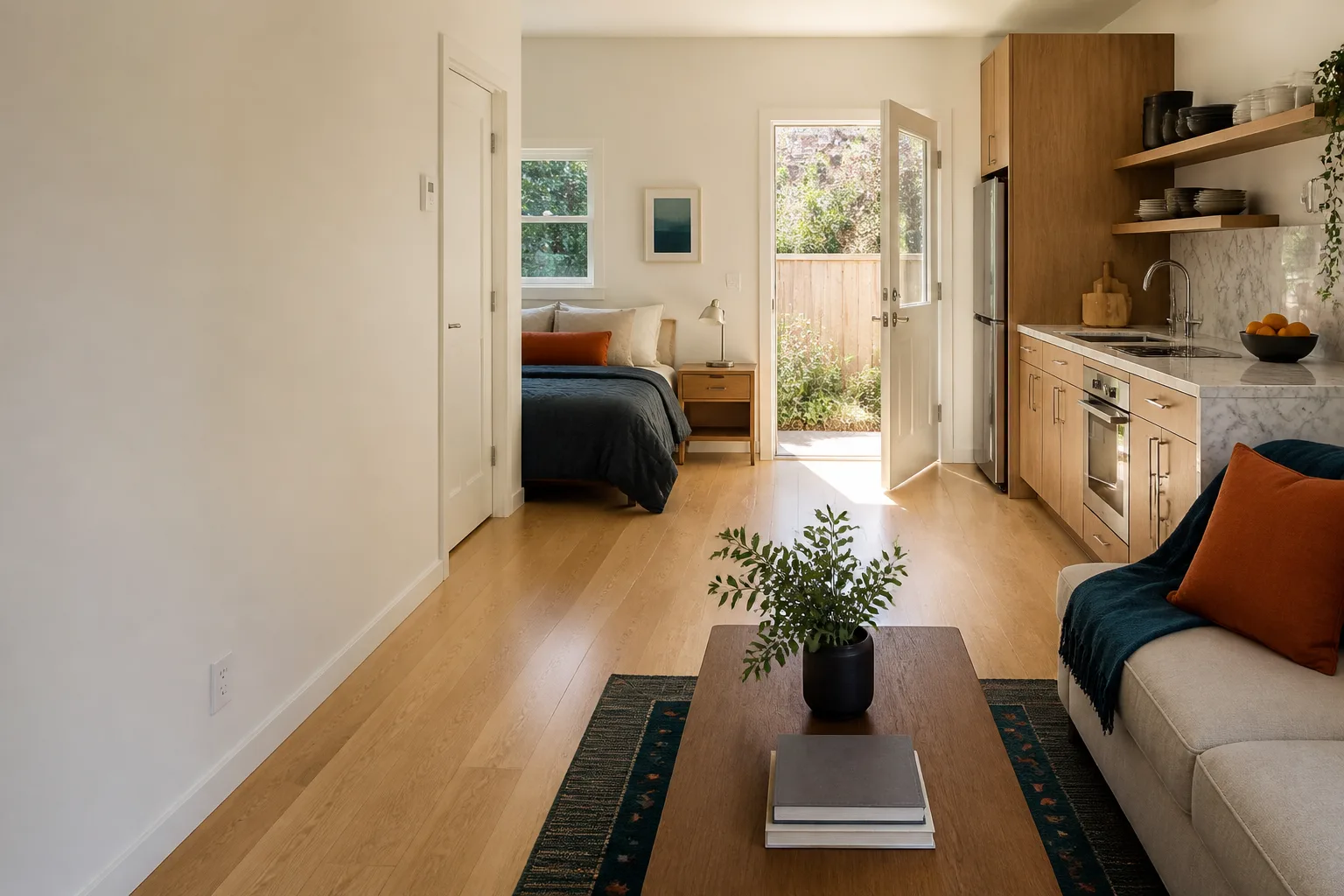
A Junior ADU is a compact unit created inside the existing walls of your home. It isn’t a separate building, and it doesn’t add new square footage to the footprint. Instead, you take existing space, most often a portion of the main house or a converted interior area, and reconfigure it into a small living unit.
Three features define a JADU and separate it from everything else:
- It’s capped at 500 square feet. That’s the ceiling under Washington State code, and it applies regardless of how much open space you have in the house. You can’t build bigger by calling it a JADU.
- It’s carved from the primary structure. The unit must be inside the existing house, not a new detached building and not a converted detached garage in the typical sense.
- It can share certain elements with the main home. Depending on how the unit is configured and what the city allows, a JADU can sometimes use the primary home’s bathroom or kitchen facilities rather than having a fully independent set. This is one of the reasons it costs less than a full ADU.
For Everett homeowners, the appeal of the junior ADU is straightforward. When you’re working with an older home near the waterfront or in one of the neighborhoods with tighter lot dimensions, a JADU lets you add rental income or family space without a ground-up build. We’ve walked many Everett homeowners through the difference between a JADU and a garage conversion, and they often overlap in cost and complexity. The JADU is essentially an interior conversion with a specific regulatory status.
What the JADU is not: a smaller detached cottage, a tiny home in the backyard, or a unit you can expand later without going through a separate permitting process. It’s a specific format with specific limits.
What Makes a Full ADU Different?
A full ADU is a complete, independent dwelling on your property. It has its own full kitchen, its own full bathroom, its own entrance, and, crucially, it doesn’t have to be carved from the existing house. A full ADU can be:
- A detached structure in the backyard
- A unit attached to the main home but with an independent entry and utilities
- A converted garage, in many configurations
- A prefab or modular unit placed on the lot
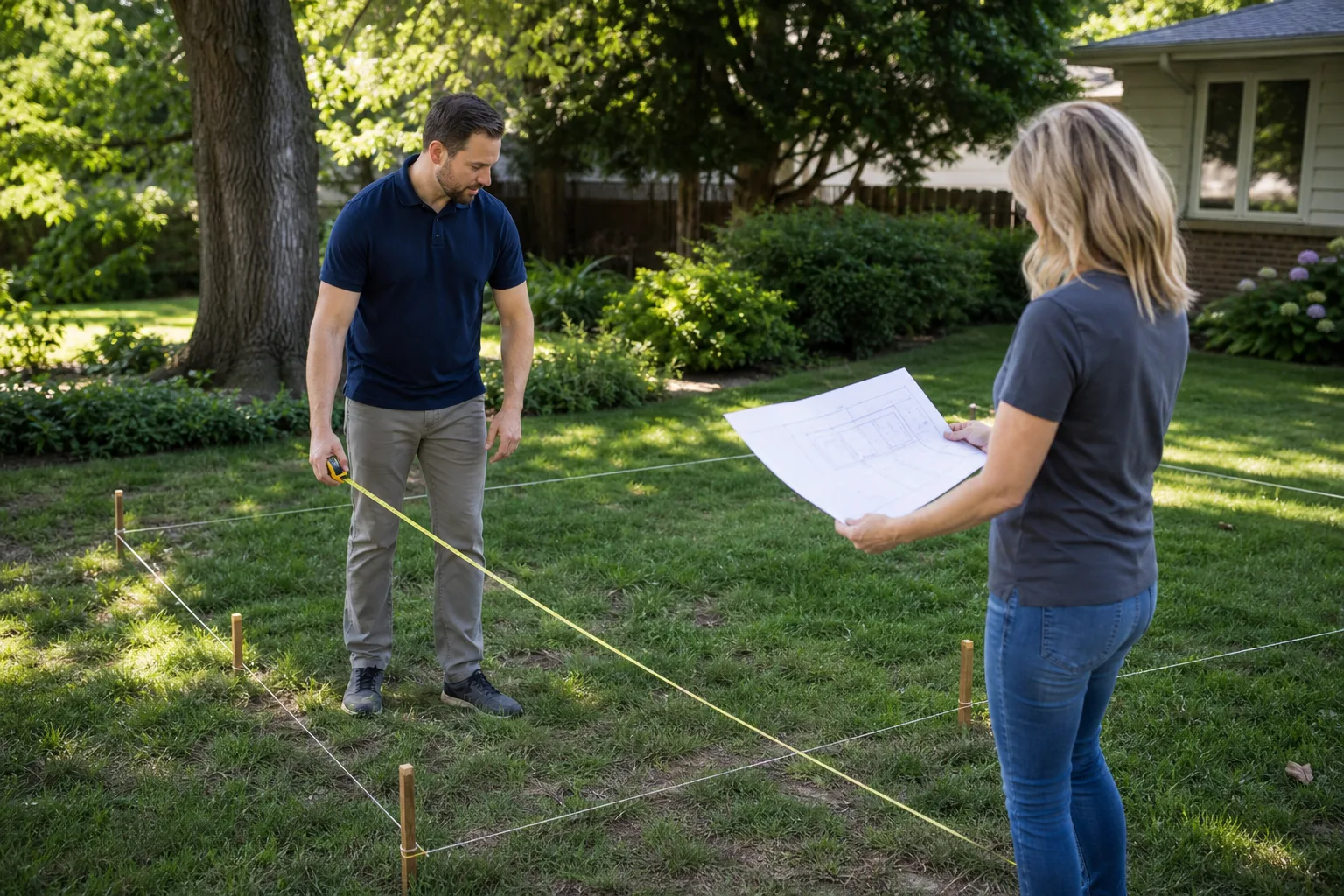
The size allowances for a full ADU are considerably larger than a JADU’s 500 square feet, though the exact limits depend on your lot, zoning, and city rules. We confirm those with the city’s planning department before plans are finalized, because they change and they vary by parcel.
This is where prefab becomes useful for some homeowners and not others. Premium prefab brands like Abodu, Cover, and Dvele offer design-forward, factory-built units that lock in consistency and can shorten the path from approval to move-in. As an authorized partner for those brands, we can present them alongside a custom build and let you compare what actually fits your lot and your budget, rather than steering you to whichever option is easiest to sell.
The core difference from a JADU comes down to independence. A full ADU stands alone as a dwelling. A JADU is a unit inside your home. That distinction drives almost every downstream decision: how you rent it, how you finance it, and what it’s worth when you sell.
Owner-Occupancy Rules: The Constraint Most People Miss
This is the part of the JADU decision that catches homeowners off guard, and it’s the reason we lead with it. Washington’s rules around owner-occupancy differ between JADUs and full ADUs, and how they apply has shifted as the state has updated its ADU framework. HB 1337, the state law that reshaped local ADU rules across Washington, changed what cities can require and how they can restrict these units. The practical effect for Everett homeowners is worth understanding before you commit to a format.
For a JADU, the owner-occupancy requirement is typically a permanent feature of how the unit is permitted. In plain terms, the JADU is tied to you living on the property. That link doesn’t dissolve when you decide to move, and it shapes how the unit can be used over time. In our experience, most homeowners who pick a JADU haven’t considered what that means if they later want to relocate and keep the property as a rental.
A full ADU doesn’t carry the same structural owner-occupancy tie. That doesn’t mean there are no rules. It means the unit is a genuinely separate dwelling, so the way it’s rented and the way the property can be held are treated differently under state and local frameworks.
A few things to keep in mind as you compare:
- Confirm the current rule with the city. State law sets the floor, but the specifics of how owner-occupancy applies to your parcel get confirmed with Everett’s planning or building department before plans are final.
- Think about your five-year and ten-year plans. If there’s any chance you’ll rent the whole property and move elsewhere, a JADU’s owner-occupancy tie matters more than the upfront savings.
- Ask about the language in the permit itself. Owner-occupancy requirements are often recorded as a condition. That condition doesn’t disappear because circumstances change.
This is the difference between a decision that looks cheaper on paper and one that’s genuinely cheaper once you price in what the unit can and can’t do. It’s the single biggest reason a homeowner chooses a full ADU over a junior ADU after running the numbers rather than just the square footage.
The 500 Square Foot Ceiling and What It Means for Rent
Five hundred square feet is the hard cap on a JADU under state code, and that number matters more than it first appears. A 500 square foot unit is a studio or a very compact one-bedroom. It can be comfortable, well-designed, and entirely rentable. What it can’t be is a unit that competes in the same rental tier as a 700 or 900 square foot full ADU.
That gap shows up in two ways:
- Rent ceiling. A smaller unit commands less rent. That’s not a flaw in the JADU; it’s a real ceiling you should price in when you’re modeling the return.
- Tenant pool. A studio works well for a single renter or a couple. A family or a renter who needs a dedicated home office usually looks for something larger, which a full ADU can offer and a JADU generally can’t.
In Everett, where rental demand is steady across a range of housing types, that ceiling shows up in your monthly cash flow. A well-designed JADU in a strong location can still perform well. The question is whether the performance meets what you’re trying to accomplish. If your goal is modest supplemental income or a place for a family member, a 500 square foot JADU often works. If your goal is a unit that generates meaningful rental income and stands on its own in the market, the lower ceiling works against you.
The full ADU’s size allowance is set by your lot and local rules, not by a flat state cap the way a JADU is. That flexibility is where the rental upside sits. It’s also where the cost of construction sits, which is the honest tradeoff. We don’t pretend a full ADU costs the same as a JADU. It doesn’t. The question is whether the extra rent and flexibility pay you back over the life of the unit, and that depends on your numbers.
How Lenders Treat JADU Income vs. ADU Income
Here’s another difference that tends to surface later than it should: how lenders treat the rental income. When you refinance or take out a home equity loan, an appraiser looks at the property and the units on it. The way a JADU and a full ADU are valued and underwritten is not identical.
The reason connects back to the two factors above. A JADU is a 500 square foot unit inside the primary structure with an owner-occupancy tie. A full ADU is an independent dwelling. Lenders and appraisers treat a separate dwelling with its own kitchen, bathroom, and entrance as a more clearly defined rental asset. That generally makes its income easier to count when you’re qualifying for a loan, and it can support a higher appraised value for the property.
A JADU’s income is real income, and it counts in plenty of lending scenarios. But the owner-occupancy condition and the smaller footprint mean the income is sometimes discounted or handled more conservatively during underwriting. The specific treatment depends on the lender and the loan product, which is why we tell homeowners to have this conversation with a lender before they commit to a format, not after.
A practical checklist:
- Talk to your lender before you design. Ask specifically how they count JADU income versus full ADU income on a refinance or HELOC.
- Ask how the unit will be appraised. A separate dwelling is typically treated as an additional unit of value; a JADU is treated as an accessory space.
- Match your format to your financing plan. If your plan depends on pulling equity out of the property in a few years, the unit type you build now affects that plan.
- Get the appraiser’s view on your specific home. Everett homes vary widely, and the value of an accessory unit depends on the neighborhood and the lot.
None of this is a reason to avoid a JADU. It’s a reason to make the choice with your lender’s input rather than reading it later on a closing document.
Structural Eligibility: Can Your Home Actually Hold a JADU?
A JADU has to be carved from the existing primary structure, and that requirement is more restrictive than it sounds. Some Everett homes are an easy fit. Others aren’t, and the reason is usually structural rather than regulatory.
Two conditions come up most often in our work:
- Slab foundations. A home on a post-and-pier or crawlspace foundation gives you more flexibility when you’re reconfiguring interior plumbing and drains. A slab foundation can make it harder and more expensive to move plumbing to where a JADU’s fixtures need to go, because the work has to go through or above the slab rather than under the floor.
- Low ceiling heights. An older Everett home with a low ceiling in the space you’d use doesn’t leave much room for a code-compliant living area. There’s a minimum height standard, and if your existing ceiling doesn’t meet it, a JADU may not be physically workable in that spot without major structural changes.
This is where the format decision becomes practical rather than theoretical. If your home has a generous footprint with a crawlspace and solid ceiling heights, a JADU may be a clean fit. If not, a full ADU, whether detached, attached, or a garage conversion, can be the format that actually gets built.
Our technicians have up to 12 years of experience assessing which format fits an existing structure, and that assessment usually takes more than a walkthrough. We look at the foundation, the ceiling heights, the existing plumbing and electrical, and the structural capacity of the space. If a JADU isn’t a good fit for your home, we say so and walk through what a full ADU would involve.
Long-Term Flexibility: Selling, Moving, Changing Occupancy
The question most homeowners don’t ask until much later: what happens to the unit when my circumstances change? That’s where a JADU and a full ADU part ways most significantly.
If you sell. A full ADU travels with the property as a defined, independent dwelling. It’s an additional unit of value that a buyer can see, rent, and count. A JADU travels with the property too, but it carries its owner-occupancy condition with it. That condition limits who the next owner can be, and a buyer who wants to rent both the main house and the unit won’t be able to use the property the way they’d use one with a full ADU.
If you move and keep the property. This is the scenario we see homeowners underestimate. A full ADU doesn’t force you to live on the property, so you can relocate and rent both the house and the unit. A JADU ties your ability to rent it to your continued presence, and that limit is baked in.
If you want to change how the unit is used. A full ADU can shift between rental, family use, a home office, or a place for aging parents without regulatory friction. A JADU can do all of those things too, but with the owner-occupancy condition fixed in place and a hard size cap, the range of uses is narrower.
This is why we describe the choice as a decision about the long-term shape of your property, not a decision about walls and square footage. The format you pick now sets the terms you live with later. A homeowner planning to move within ten years is comparing two very different financial pictures than a homeowner who intends to stay for decades.
How to Decide: A Step-by-Step Framework
Once you understand the differences, the decision follows a clear path. Here’s the process we walk Everett homeowners through, in order:
- Define your goal. Are you adding rental income, housing a family member, creating workspace, or some combination? Each goal points toward a different format.
- Set your time horizon. If you plan to stay on the property long-term, the JADU’s owner-occupancy tie matters less. If a move is plausible, it matters a great deal.
- Confirm structural fit. Look at your foundation and ceiling heights in the space you’d convert. If a JADU isn’t a clean fit, move to a full ADU comparison without losing time.
- Run your financing plan past a lender. Ask how each format’s income is counted on a refinance or equity loan. Do this before design.
- Confirm the current rules with the city. The specifics of owner-occupancy, size limits, and what’s allowed on your parcel get confirmed with Everett’s planning or building department before plans are final. Rules change, and what applied to a neighbor’s project may not apply to yours.
- Compare cost and return side by side. Look at the JADU’s lower build cost and lower rent ceiling against the full ADU’s higher cost and greater flexibility, with your numbers.
- Choose the format, then the construction path. Decide between a custom build and a prefab unit from a brand like Abodu, Cover, or Dvele based on what actually fits.
We run this framework as specialists, not generalists. ADU work is the only thing we do, which means we’re tracking the user-occupancy language, the size limits, and the lender treatment continuously rather than brushing up on it when a client asks. Our ADU builders handle design, permitting, and construction as one project, so the decision at step two and the permit at step five don’t get handled by two different people who never talk to each other.
Common Mistakes to Avoid
- Choosing on square footage alone. A homeowner who picks a JADU because it’s smaller and cheaper without weighing the owner-occupancy tie has made an incomplete decision. The size is the easy part to compare; the constraints are the part that matters.
- Assuming the rental numbers are equal. A 500 square foot cap means a lower rent ceiling. If your plan depends on a certain monthly income, model the actual unit size before you commit, not after.
- Ignoring the lender conversation until after design. How a JADU’s income is counted affects your refinance and your equity plans. Getting this answer from a lender before design is far cheaper than discovering it during underwriting.
- Forgetting the structural reality. A slab foundation or a low ceiling in the space you want to convert can disqualify a JADU in that spot. Check before you draw plans.
- Using a general contractor who builds an ADU occasionally. Rules and lending treatment shift. A builder who does one ADU a year tracks changes differently from an ADU specialist who works with Everett homeowners across every format.
- Overlooking what happens when you sell. The owner-occupancy condition on a JADU travels with the property. Buyers who want to rent both the main house and the unit look elsewhere.
- Assuming a neighbor’s project applies to you. Rules depend on your city and your parcel. Confirm the specifics for your lot with the city’s planning or building department before plans are finalized.
When to Call a Professional
If you’re unsure which format fits your property, a professional assessment of your lot and your home will save you from committing to a unit that doesn’t match your long-term plans. Call a professional when you’re weighing the owner-occupancy consequences of a JADU, when your home’s foundation or ceiling heights make structural fit uncertain, when you need your lender’s treatment of the two unit types answered before design, or when you simply want both formats priced side by side before deciding. ADU Builder Everett offers free estimates in Everett. Call (425) 645-3459. We answer 24/7. Fast dispatch from 7am to 7pm, Sunday through Friday. Our ADU Builder Everett team can walk you through the comparison that fits your lot and your goals.
Frequently Asked Questions
A JADU is capped at 500 square feet under state code and is carved from your existing primary structure, while a full ADU is an independent dwelling, either detached or attached, with its own full kitchen and bathroom. The JADU typically carries an owner-occupancy tie that a full ADU doesn’t. That difference in independence drives the rental, financing, and long-term flexibility differences between the two.
Owner-occupancy requirements for a JADU are typically a permanent feature of how the unit is permitted, and Washington’s rules around this changed with HB 1337. The specifics depend on state law and Everett’s local framework, so we confirm them with the city’s planning or building department before plans are final. If you’re planning to rent the property and move later, ask about this before you commit to a JADU.
You can rent a JADU, but the owner-occupancy condition typically ties that rental to your continued presence on the property. A full ADU doesn’t carry the same tie. If your plan involves relocating and renting the whole property, that difference can matter as much as the 500 square foot ceiling. Rental rules depend on the city, so confirm them with the city for your specific unit.
A JADU generally costs less than a full ADU because it’s carved from existing space rather than built new, but the exact cost depends on your home’s structure, the space you’re converting, and the finishes you choose. Cost also depends on whether a full ADU is built custom or placed as a prefab unit. Call (425) 645-3459 for a free estimate; the written estimate sets the final price.
A full ADU typically adds a defined, independent unit of value that appraisers and lenders count more clearly, while a JADU is valued as accessory space with an owner-occupancy condition. The actual value depends on your neighborhood, your lot, and how the unit is appraised. Ask your lender and appraiser how each format would be treated on your specific property before you decide.
It depends on the space and the fixture layout. A slab foundation can make interior plumbing reconfiguration harder and more expensive, but it doesn’t automatically rule out a JADU. Ceiling heights and the structural capacity of the space matter just as much. Our assessment looks at all of these before we recommend a format, and if a JADU isn’t a good fit, a full ADU or a garage conversion often is.
The Bottom Line
The JADU versus full ADU choice isn’t about size preference. It’s about what each format lets you do. A JADU is cheaper, fits inside your existing home, and caps at 500 square feet, but it typically ties your rental income to your continued presence on the property. A full ADU costs more and gives you a genuinely independent dwelling that’s easier to rent, finance, and sell. Everett homeowners who weigh owner-occupancy, the rent ceiling, lender treatment, and structural fit before committing make a decision they can live with for years rather than one they discover later. From permit to move-in, we handle the full project and help you right-size the unit to your lot and your goals. Call (425) 645-3459 to schedule your free estimate.
Written by the team at ADU Builder Everett.